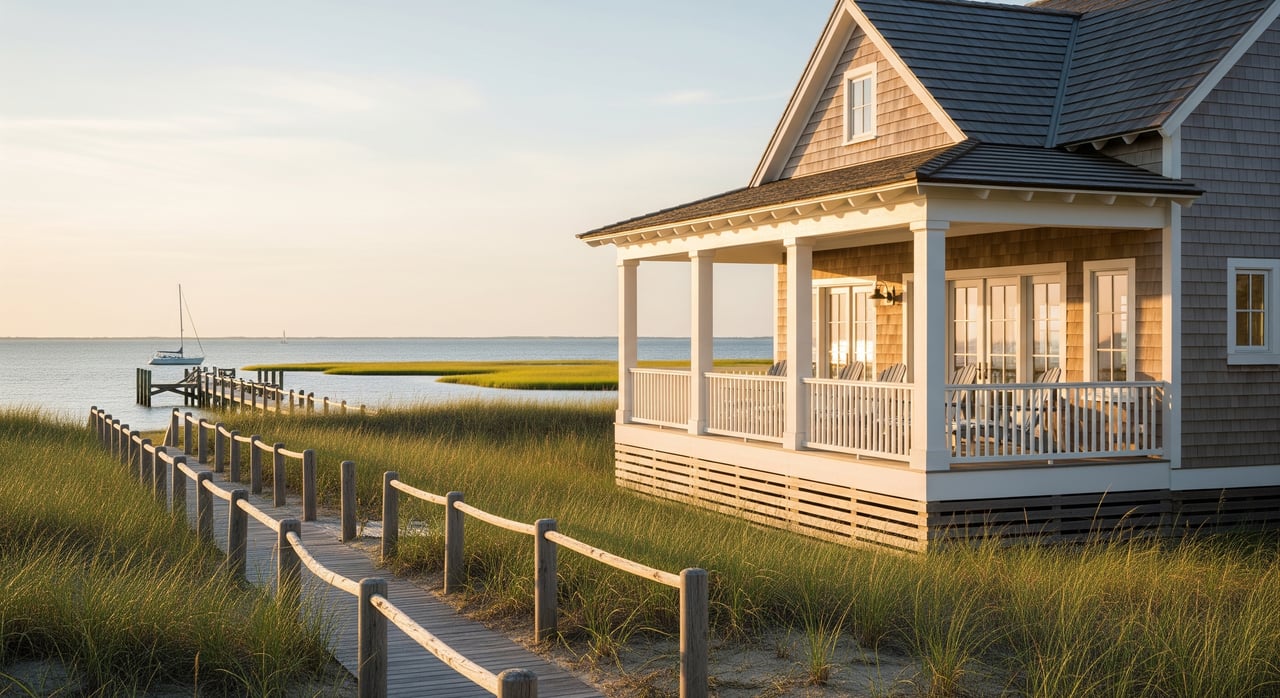
Imagine ending your day with a quiet stroll along a soundfront boardwalk as the sky glows pink over calm water. If you’re dreaming about the Outer Banks and want a place that feels relaxed, walkable, and a bit refined, Duck might be the right fit. You likely have questions about daily life, seasons, beaches, services, and what ownership looks like here. This guide walks you through what it’s really like to live in Duck, so you can decide with confidence. Let’s dive in.
Where Duck sits on the OBX
Duck is a small coastal town on the northern end of the Outer Banks in Dare County. It hugs the Currituck Sound on one side with the Atlantic Ocean just across the island on the other. You’ll find a quieter, village-style setting compared to busier OBX hubs to the south.
You get soundfront sunsets, a compact village core, and easy access to calm-water activities. If you prefer low-key evenings and a slower pace over big nightlife, Duck lines up well with that lifestyle.
Walkable village and boardwalk
Duck Boardwalk life
Duck’s boardwalk along the sound is the heart of the village. You can walk, sit on benches, watch for birds, and enjoy street performers or live music during the warmer months. The boardwalk connects small shops and gathering spaces, so it feels like a community living room.
Families stroll at sunset, paddlers launch nearby, and you can people-watch while a breeze rolls off the water. Seasonal events often center around the boardwalk and village green.
Getting around and parking
The village core is compact and friendly for walking. Many homes still rely on car access, especially those outside the core. In summer, crowds and turnover days can make parking and strolling busier, so you plan ahead during peak weeks.
In the off-season, the pace is calm and parking is easier. Check current town rules for any seasonal parking programs and event schedules.
Beach access basics
Duck offers public beach access points on the ocean side. Depending on where you live, you may walk, bike, or take a short drive to a signed access. Amenities vary by location, and some areas may have seasonal parking rules. Always review current town or county maps for the closest access to your property.
Beaches and water
Ocean days
On the Atlantic side, you can expect wide beach days, surf lessons, and long shoreline walks. Many residents enjoy fishing from shore, shelling after a storm, and early morning runs before the midday bustle.
Soundside fun
The Currituck Sound is a playground for calm-water activities. Kayaking and paddleboarding are common, and you’ll see sailing, crabbing, and birdwatching when conditions are right. Sunsets over the sound are a big part of daily life here.
Nature and stewardship
You live close to coastal ecosystems, from dunes and sea oats to migratory birds and protected sea turtles. Seasonal rules may affect beach lighting and activity in nesting periods. Residents often approach life here with a coastal stewardship mindset.
Dining, shops, and events
Food and drink
Duck’s dining leans coastal, with seafood, casual staples, and a few mid-upscale choices. You’ll also find bakeries, coffee spots, and seafood markets. Hours can be seasonal, so in winter you confirm what’s open before you go.
Boutiques and services
Expect coastal boutiques, art galleries, surf and watersports shops, and outfitters. Everyday basics are nearby, but big-box stores and larger grocery options are usually in neighboring towns or on the mainland. Plan your errands for efficient trips, especially in summer traffic.
Music and events
Live music and family-friendly programs pop up in peak season around the boardwalk and village green. Events are community oriented, relaxed, and sized for a small town.
Nightlife expectations
Evenings are more about dinner and conversation than late-night venues. If you want high-energy nightlife, you will likely look outside Duck.
Season by season living
Summer
Summer brings peak energy. Beaches fill up, restaurants hum, and special events are common. You’ll plan for parking, restaurant wait times, and more noise during busy weeks.
Spring and fall
Shoulder seasons are local favorites. The weather is pleasant, crowds thin out, and prices for rentals often ease. It’s a great time to explore neighborhoods, plan renovations, and enjoy the outdoors.
Winter
From late fall into early spring, life quiets down. Many businesses reduce hours or pause for the season. If you live here year-round, you’ll appreciate the small-town feel, light traffic, and peaceful days.
Weather and storms
Summers are warm and humid, and winters are generally mild to cool. Hurricane season runs from June through November, which influences insurance, property prep, and travel plans. Many second-home owners coordinate with property managers for storm readiness and post-storm checks.
Homes and ownership
Housing types
Duck features mostly single-family coastal homes, including many that serve as vacation properties. You will also find some condos and duplexes, though the village identity skews toward single-family streets.
Ownership and rentals
A large share of homes are second homes or short-term rentals. That shapes daily rhythms, especially in summer, and can affect inventory for primary residences and year-round services. If you plan to rent your home, you’ll review local ordinances, permitting, and taxes before you buy.
Buyer due diligence checklist
Before you write an offer, make sure you:
- Review town zoning and short-term rental rules for your address.
- Check FEMA flood maps and confirm elevation details.
- Obtain quotes for flood and wind/hurricane coverage.
- Understand HOA rules, parking, beach access, and any architectural guidelines.
- Speak with local property managers about seasonal prep and rental operations.
- Confirm utility providers, trash schedules, and any seasonal service limits.
- Review county property records and discuss market conditions with a local agent.
Services, schools, and healthcare
Duck is served by Dare County Schools. Since assignments and programs can change, you will verify current options directly with the district.
On-island, you’ll find basic medical and urgent care resources in the wider OBX area. For hospital services, most residents plan on regional facilities on the mainland or in larger OBX towns. It helps to map out routine care and emergency routes in advance.
Municipal services include waste collection and seasonal beach maintenance. Transportation is centered on NC-12, with limited public transit. Most residents rely on a car and plan extra time during peak-season traffic. Major air travel typically runs through regional airports serving the OBX, with Norfolk International often used by residents and visitors.
Is Duck a fit for you?
Duck’s appeal is clear if you want a refined, walkable village with dual-water access and a calm, community vibe. It is especially attractive to second-home owners who enjoy summers full of activity and quiet off-seasons.
Consider the tradeoffs:
Pros
- Walkable village core and soundfront boardwalk
- Access to ocean and sound for varied water activities
- Seasonal events and quality local dining
- Peaceful off-season rhythm
Tradeoffs
- Seasonal crowds and parking constraints in summer
- Limited late-night options and big-box retail nearby
- Higher coastal insurance and ownership considerations
- Car dependence and traffic during peak weeks
How a local advisor helps
Buying or selling in a coastal town involves unique details. You want local insight on flood zones, insurance, beach access, short-term rental rules, and dependable vendors. You also want a team that can coordinate inspections, repairs, or rental setup if you live out of town.
With deep roots across the Outer Banks and a concierge approach, you can streamline the process, avoid surprises, and make confident choices. If you are exploring Duck for a second home, planning a sale, or considering a lot or build project, local guidance makes every step smoother.
Ready to talk specifics for your goals in Duck and the broader OBX? Connect with Lynn Bulman for trusted, high-touch guidance backed by decades of local experience.
FAQs
How walkable is Duck’s village core?
- The village core is compact and pedestrian friendly, with many shops and gathering spots along the soundfront boardwalk; outside the core most residents still use a car, especially in summer.
What are Duck’s beaches like for daily use?
- Ocean access points are available around town; depending on your address you may walk, bike, or drive, and you should confirm the closest signed access and any seasonal parking rules.
What is the pace of life across the seasons?
- Summer is lively with visitors and events; spring and fall bring great weather and lighter crowds; winter is quiet with reduced hours at some businesses.
What should I know about rentals and regulations?
- Short-term rentals are common; review town rules, permitting, occupancy limits, and taxes for the property you are considering before you buy.
How do flood zones and insurance affect ownership?
- Flood zone, elevation, and coastal wind exposure can impact required coverage and premiums; check FEMA maps and get insurance quotes during due diligence.
How do residents travel to and from Duck?
- Most daily travel runs on NC-12, with heavier traffic in peak season; for air travel, many residents use regional airports that serve the OBX, often Norfolk International.
