Thinking about buying a second home in Duck? It is easy to picture the fun parts first: beach days, sunset walks on the boardwalk, and having your own place in one of the Outer Banks’ most recognizable towns. But ownership here also comes with specific costs, access rules, and maintenance needs that can surprise out-of-town buyers. If you want a clear picture of what day-to-day ownership really looks like in Duck, this guide will walk you through the practical details that matter most. Let’s dive in.
Duck living starts with location
Duck has a distinct feel even within the Outer Banks. The town sits on a barrier island along the Currituck Sound and is shaped by amenities like the 11-acre Town Park, the soundside boardwalk, and the six-mile Duck Trail. Annual events such as the Duck Jazz Festival also help define the town’s seasonal rhythm.
One of the most important things to understand is how much location affects daily convenience. Duck Road, also known as NC 12, is the main commercial road and the only continuous north-south connection through town. That means your home’s position relative to NC 12 can influence access, traffic flow, and how easily you move around during busy times of year.
What homes in Duck are like
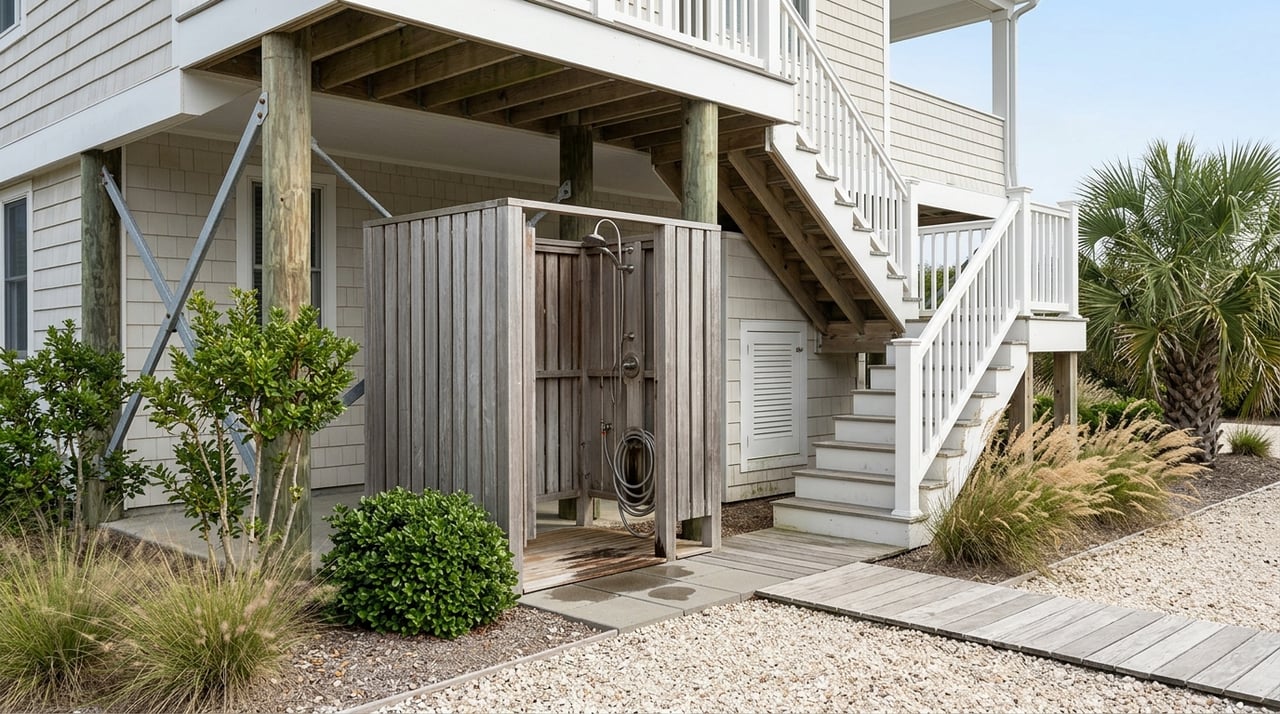
Duck is not a one-size-fits-all beach market. According to the town’s budget data using 2019 ACS figures, Duck had 2,941 housing units, and about 83% were single-family homes. Many of these homes are elevated, with two to three stories of living space over parking.
Oceanfront and soundfront homes often focus on outdoor living with patios and pools. In other parts of town, you will also find attached or multifamily-style communities with shared parking, and some of those buildings reach four stories. This mix gives buyers a range of options, from larger rental-oriented homes to more compact properties in clustered communities.
Duck’s development pattern is also shaped by zoning limits and the town’s reliance on septic systems. In practical terms, that means inventory can feel more varied and more constrained than in a typical subdivision market. For second-home buyers, it helps to think less in terms of cookie-cutter neighborhoods and more in terms of ownership style, access, and long-term upkeep.
Beach access works differently here
One of the biggest surprises for second-home buyers is that Duck does not operate like a town with broad public beach parking and town-managed beach access. The town says it neither owns nor maintains public beach access locations. Access is limited to Duck residents, Duck renters, and their guests through privately owned and maintained locations.
That detail matters a lot when you are choosing a property. There are no public parking areas at beach accesses in Duck, and the town brochure states there are no municipally owned beach accesses or soundside beaches. Most subdivisions have community access, but you should verify exactly what comes with a specific property before you buy.
Why access should be part of your search
If you are comparing homes, beach-access rights should rank near the top of your checklist. Two homes at a similar price point can offer very different ownership experiences depending on subdivision access, parking rules, and any neighborhood covenants. This is especially important if you plan to share the home with guests or use it as a seasonal rental.
Duck does offer excellent public amenities on the sound side. The Town Park includes sound access, a kayak and canoe launch, transient-use boat piers, and event space. Those amenities add a lot to the lifestyle, but they are not a substitute for deeded or community ocean-beach access.
Private roads and shared amenities matter
Another ownership feature that stands out in Duck is the number of privately owned roads. The town’s land-use plan says the vast majority of roads are privately owned and maintained by homeowners or neighborhood associations. That means road upkeep and related rules may not be handled the way they would be in a town with mostly public streets.
This is one reason community documents matter so much in Duck. Depending on the neighborhood, ownership may involve shared responsibility for roads, beach walkways, parking areas, pools, tennis courts, or other common features. The zoning ordinance also contemplates private clubs and amenities such as boat-launching areas, picnic areas, community centers, beach clubs, and accessory pools or tennis courts.
Questions to ask before you buy
When you look at a second home in Duck, ask for clear answers to these practical questions:
- Who maintains the road to the property?
- Are there association dues or special assessments?
- What beach-access rights come with the home?
- Are there parking restrictions for owners, guests, or renters?
- What shared amenities are included?
- Are there rules that affect rentals or exterior improvements?
These details may not show up in listing photos, but they can shape your ownership costs and convenience in a big way.
Seasonal use can affect your budget
Duck is a town built around seasonal living, and the zoning ordinance permits short-term rental homes that are generally seasonal in nature. If you plan to use your second home part of the year and rent it at other times, it is important to understand the local tax picture.
Dare County levies a 6% occupancy tax on gross receipts from transient lodging, including private residences and cottages rented to transients. The tax does not apply to rentals under 15 days per year or stays of 90 or more consecutive days. The town notes that occupancy-tax revenue supports tourist-related public services, including public facilities, garbage, police, and emergency services.
Know the taxes before closing
Property taxes in Duck include both town and county rates. For FY2025-26, the Town of Duck rate is 0.1800 and the Dare County rate is 0.2632, for a combined base rate of 0.4432 per $100 of assessed value before any beach-nourishment district tax.
Some properties also fall within beach-nourishment municipal service districts. Duck lists those rates as 0.0798 in MSD A and 0.1890 in MSD B. That means two similar properties can carry different annual tax obligations depending on district location.
At closing, Dare County also levies a land-transfer tax of $1 for every $100 of sale price. Tax bills are mailed in July, due September 1, and delinquent after January 5.
A simple way to think about carrying costs
When you budget for a second home in Duck, look beyond the mortgage payment. Your ongoing cost picture may include:
- Mortgage payment
- Property taxes
- Any MSD tax
- Insurance
- Septic maintenance
- HOA or private-road costs
- Occupancy tax if you rent the home
- Transfer tax at purchase
For many buyers, the smartest move is to compare total carrying costs instead of just comparing sale prices.
Flood, storm, and erosion risks are part of ownership
Duck is relatively sheltered compared with some barrier island communities, but coastal risk is still part of the ownership equation. The town’s vulnerability assessment identifies exposure to oceanfront erosion, soundside flooding, storm surge, sea-level rise, and winter nor’easters. The assessment also notes that Duck has relatively low overall vulnerability compared with many barrier island communities because of its sheltered setting and interior elevation.
That said, risk is not uniform from one property to the next. NC 12 remains the critical corridor through town, and soundside infrastructure still faces flood and erosion concerns. For a second-home buyer, this means property-level due diligence matters more than assumptions about the town as a whole.
Flood maps and insurance should come early
Duck’s flood page says FEMA flood maps are the official source, and the current effective maps date to June 19, 2020. Many flood-zone activities require permits, and flood insurance can be mandatory in special flood hazard areas. The town also notes that the 2020 map update shifted 837 properties out of special flood hazard areas, but residual risk remains.
Before you write an offer, ask for the flood zone, any available elevation certificate, and any known flood history. Duck can provide current flood information and FEMA elevation certificates for structures built since incorporation. Getting those details early can help you evaluate both risk and insurance costs with more confidence.
Storm readiness is part of the deal
If you own a second home here, storm planning should be routine, not optional. Duck says the Atlantic hurricane season runs from June 1 through November 30, and the evacuation route is NC 12 south to US 158 west. The town also advises that if an evacuation is ordered, visitors should take their belongings because re-entry timing cannot be predicted.
For insurance, North Carolina notes that dwelling policies are commonly used for vacation homes, seasonal homes, secondary homes, and rental properties. If the home will not be your primary residence, it is worth reviewing coverage carefully so your policy matches how you actually use the property.
Septic and maintenance deserve close attention
In Duck, wastewater is handled by on-site private septic systems in the majority of cases. That alone makes septic one of the most important due diligence items for second-home ownership. The town even offers a complimentary septic-inspection pilot for property owners, underscoring how central this issue is in the local housing stock.
If a septic system has not been maintained well, it can affect both the property and nearby coastal waters. Ask about the system’s age, maintenance history, and whether permits may be needed for any future work. If you plan to renovate, add bedrooms, or change how the home is used, septic capacity becomes even more important.
Everyday ownership has a schedule
Second-home ownership in Duck also includes practical systems you will need to manage from near or far. The town’s curbside program runs twice weekly for trash in summer and once weekly in the off-season. Recycling is weekly in summer and twice monthly in winter.
Rental properties must have at least two approved solid-waste containers, and larger homes need more. The town also provides two free bulk-waste collections each year. If you plan to rent your home, trash setup and turnover coordination should be part of your operating plan, not an afterthought.
A smart Duck second-home checklist
Before you move forward on a purchase, make sure you confirm these items:
- Whether the property is in MSD A, MSD B, or neither
- The FEMA flood zone and any available elevation certificate
- Beach-access rights and parking rules
- HOA covenants or private-road responsibilities
- Septic age, condition, and maintenance history
- Trash-container requirements if you plan to rent
- Insurance options for a second home or rental use
A careful review on the front end can save you from expensive surprises later.
Why local guidance matters in Duck
Duck can be a wonderful place to own a second home, but it rewards buyers who understand the town’s details. Access rights, private roads, flood considerations, taxes, and septic systems all play a larger role here than they do in many inland markets. When you know what to expect, you can buy with a lot more confidence.
That is where experienced local guidance makes a real difference. With deep Outer Banks roots, concierge-level service, and decades of experience helping buyers navigate coastal ownership, Lynn Bulman can help you evaluate the details that matter and make your Duck purchase feel far more manageable.
FAQs
What makes owning a second home in Duck different from other beach towns?
- Duck ownership often involves private beach access, privately maintained roads, septic systems, and property-specific tax or flood considerations that can differ from one neighborhood to the next.
What should buyers know about beach access in Duck, NC?
- Duck does not own or maintain public beach access locations, and there are no public parking areas at beach accesses, so you should verify community access rights and parking rules for any property you consider.
What taxes apply to a second home in Duck, NC?
- Buyers should account for the Town of Duck tax rate, the Dare County tax rate, any applicable beach-nourishment MSD tax, and Dare County’s land-transfer tax at closing. If you rent the home, a 6% occupancy tax may also apply.
What flood questions should second-home buyers ask in Duck?
- Ask for the FEMA flood zone, any available elevation certificate, and any known flood history before making an offer, since flood-zone status can affect permit needs and insurance requirements.
Why is septic important for Duck second-home owners?
- Most properties in Duck rely on private septic systems, so buyers should review system age, maintenance history, and any permit issues, especially if they plan future renovations or rental use.
Is Duck a good fit for seasonal or rental ownership?
- Duck is set up for seasonal living, and short-term rental homes are generally permitted, but owners should understand occupancy tax rules, trash logistics, access rights, and maintenance responsibilities before buying.
