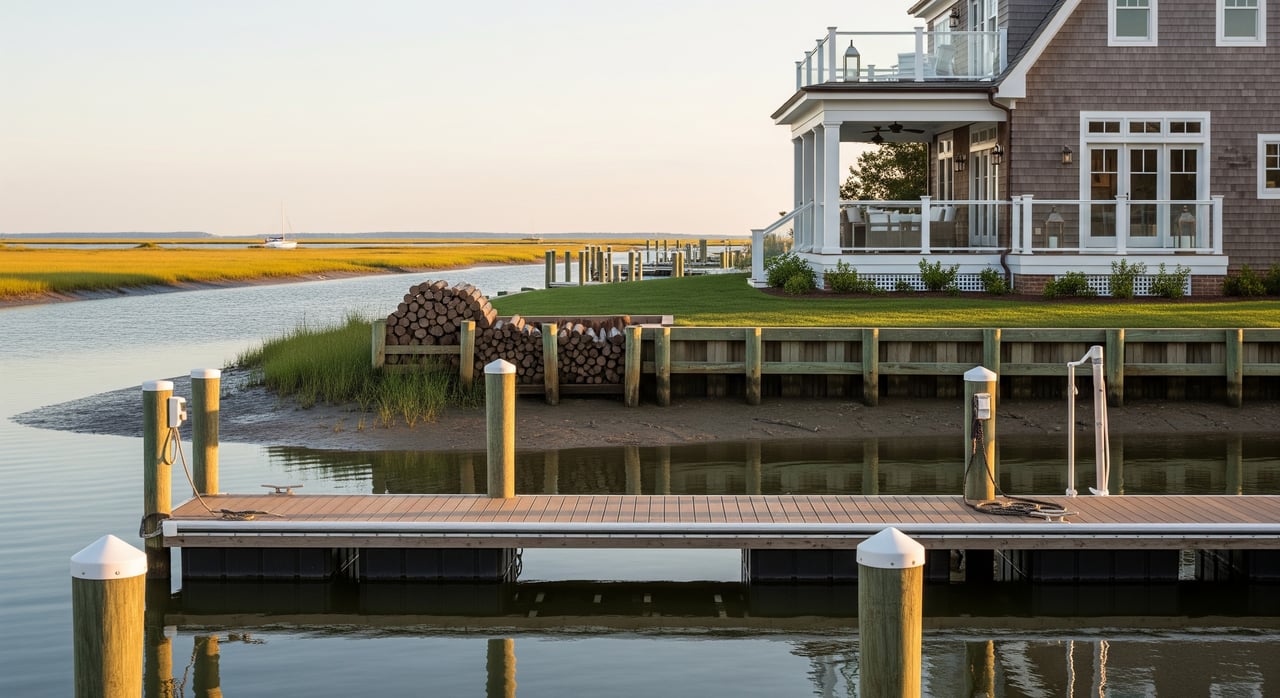
Shopping waterfront in Collington Harbor and trying to choose between canalfront and soundfront? You are not alone. Both offer water access and a great Outer Banks lifestyle, but they deliver different daily experiences and cost profiles. In this guide, you will see how the two compare for boating, views, docks, maintenance, and insurance so you can match the right lot with your priorities. Let’s dive in.
Canalfront vs soundfront basics
Collington Harbor in Kill Devil Hills (ZIP 27948) includes canalfront homes with sheltered interior waterways and soundfront homes facing the open estuarine sound. Both settings can offer private docks, but the boating experience, exposure to weather, and upkeep needs differ.
Canalfront typically means calmer, protected water and a route to the sound through neighborhood channels. Soundfront means open-water vistas and often more direct access to broader waterways. If you plan to run larger boats or head out quickly, soundfront can be compelling. If you want protection from wind and wake, canalfront may suit you better.
Boating access and navigation
If boating is your top driver, focus on water depth, route, and exposure at each lot.
Canalfront
- Sheltered water that works well for small to medium boats, kayaks, and paddleboards.
- You will navigate a neighborhood channel to reach the open sound. Some segments may be narrow or shallow at low tide.
- Dock size and boat length can be limited by canal width, depth at mean low water, and neighbor bulkheads.
Soundfront
- More immediate access to open water and often deeper water at the property.
- Better for larger powerboats and quicker runs to fishing grounds or longer trips.
- Greater exposure to wind, waves, and tide-driven currents. Dock design and placement must account for wave action and fetch.
Important note: Soundfront offers access to the sound, not direct ocean access. To reach the Atlantic, boats must navigate local inlets and channels, such as the route toward Oregon Inlet. Always confirm navigability and any seasonal shoaling before you buy.
What to verify for your boat
- Depth at the dock at mean low water and typical high-water conditions.
- Channel depth and width from the property to the open sound.
- Any fixed-bridge clearances, shoaling history, and seasonal dredging schedules.
- Lift capacity, dock strength, and insurance requirements for your vessel.
Views, privacy, and exposure
Your daily view and how your property weathers storms are just as important as boat access.
Canalfront
- More privacy with calmer water and less wind exposure.
- Views centered on boats, docks, and neighborhood canals.
- Typically fewer transient boats passing by.
Soundfront
- Expansive horizons and sunrise or sunset potential across the sound.
- More visible water activity and passing boat traffic.
- Higher exposure to wind-driven spray and larger waves, which can affect outdoor living and dock wear.
Docks, permits, and upkeep
Both canalfront and soundfront properties in Dare County may require permits to build or repair docks, bulkheads, or shoreline structures. Rules can come from the community association, the Town of Kill Devil Hills, county offices, and state or federal agencies. Confirm current requirements before you plan work.
Common setups include fixed piers with floating sections on tidal water, floating-only docks where depth allows, and shared or community bulkheads in some canal areas. Soundfront docks, lifts, and bulkheads usually face heavier wear from waves and storms, which can increase maintenance frequency and costs.
What to gather for each property:
- HOA or POA rules on dock dimensions, materials, and lifts.
- Condition and age of existing docks, pilings, bulkheads, or riprap.
- Permit history and what would be needed for repair or replacement.
- Availability of nearby marinas, fuel, haul-out, and service for larger boats. Collington Harbor has limited on-site marina infrastructure, so many owners rely on nearby services in Kill Devil Hills and Nags Head.
Insurance and flood planning
Both canalfront and soundfront homes sit in tidal, flood-prone settings. Soundfront lots are generally more exposed to storm surge and wave action, which can influence insurance costs and building requirements.
- Flood zones and base flood elevation will affect design and premiums.
- Expect wind and hurricane coverage needs, and potentially higher insurance costs on sound-exposed docks and structures.
- Soundfront shorelines can be more susceptible to erosion. Review any shoreline protection and long-term resilience plans.
Request sample homeowners and flood insurance quotes early in your search, and confirm insurability for the dock and any planned improvements.
Lifestyle and rental potential
Your ideal day on the water should guide your decision.
Canalfront lifestyle
- Quiet waterways suited to paddle sports and family boating.
- Less through-traffic and often a neighborhood feel around the canals.
Soundfront lifestyle
- Big-sky views and quick access for recreational and sport-fishing boats.
- More visible activity and interaction with passing boaters.
For rental use, soundfront homes commonly command higher rates due to open-water views and direct access. Canalfront can still rent well, especially to families and boaters who value protected moorage. Local rental rules and HOA policies will shape your options, so review them during due diligence.
Buyer checklist for Collington Harbor
Use this list to compare properties with confidence:
Property and water access
- Canalfront or soundfront orientation, frontage length, and sun exposure.
- Documented riparian rights and any easements impacting dock placement.
- For canalfront, distance and route to the sound and any narrow or shallow segments.
Navigation and dimensions
- Depth at mean low water next to the dock or potential dock site.
- Channel depth and width to open water, plus any shoaling patterns.
- Fixed-bridge clearances, if applicable.
Dock and site specifics
- Dock type, condition, age, and permits for lifts or expansions.
- Bulkhead, seawall, or riprap condition and repair history.
- HOA or POA rules for docks and any shared-slip guidelines.
Permits, regulations, and insurance
- Current FEMA flood zone and base flood elevation on the lot.
- Permits needed for new docks, repairs, or shoreline work.
- Preliminary homeowners and flood insurance quotes, including coverage for docks and lifts.
Utilities and marine services
- On-site utilities that affect lift or dock power.
- Proximity to haul-out, fuel, storage, and marine mechanics.
Practical inspections
- Marine contractor or surveyor evaluation of pilings, hardware corrosion, and submerged structures.
- Review of tide, wind, and seasonal conditions at the property.
- Confirmation of riparian boundary markers and any recorded encroachments.
How to compare two listings
When two homes look similar on paper, use these criteria to break the tie:
- Boating fit: At MLW, can the property safely float and moor your specific boat? What is the route to the open sound like on a blustery day?
- Dock resilience: Which dock and bulkhead show better construction, materials, and recent maintenance?
- Exposure tradeoffs: Are you comfortable with the wind and wave environment, or do you prefer the calm of a canal?
- Insurance and long-term costs: Which home sits in a more favorable flood zone or shows better elevation, and what do sample quotes say?
- Resale appeal: Soundfront often carries a premium due to views and water access, but it also comes with higher upkeep and insurance. Balance your enjoyment with total ownership costs.
Next steps with a local guide
Your best move is to line up facts early. Request depth measurements, recent dock inspections, HOA rules on lifts and dock sizes, and current flood zone documentation for any listing you love. Speak with a marine contractor about dock strength and lift capacity, and get quotes from a local insurance broker. If possible, take an on-water tour to experience the channel and see how traffic, wind, and tide affect your route.
If you want a shortlist of Collington Harbor canalfront or soundfront homes that match your boat size and lifestyle, we can help. As a native Outer Banks agent with decades of local experience and a concierge approach, we will verify the details that matter and coordinate the right specialists so you can move forward with confidence. Connect with Lynn Bulman to start a customized search.
FAQs
What is the main difference between canalfront and soundfront in Collington Harbor?
- Canalfront offers sheltered interior canals with a channel to the sound, while soundfront faces open water with broader views and often more direct access.
Which is better for larger boats in Kill Devil Hills, 27948?
- Soundfront lots typically offer deeper water and quicker access for larger powerboats, while canalfront may limit boat size due to canal width and depth at low tide.
Do soundfront properties have direct access to the ocean?
- No. Soundfront provides access to the estuarine sound; ocean routes require navigating local inlets and channels, so confirm navigability and conditions.
Will a canalfront home be more protected during storms?
- Canalfront settings are generally less exposed to wind-driven waves and surge than open soundfront, though all waterfront in the area is flood-prone.
What permits might I need for docks or bulkheads?
- Expect community rules plus local, county, and state permitting for new docks or shoreline work; verify current requirements before you plan repairs or additions.
How do insurance costs compare between canalfront and soundfront?
- Soundfront homes often face higher premiums due to greater exposure to surge and waves; obtain sample homeowners and flood quotes early in your search.
