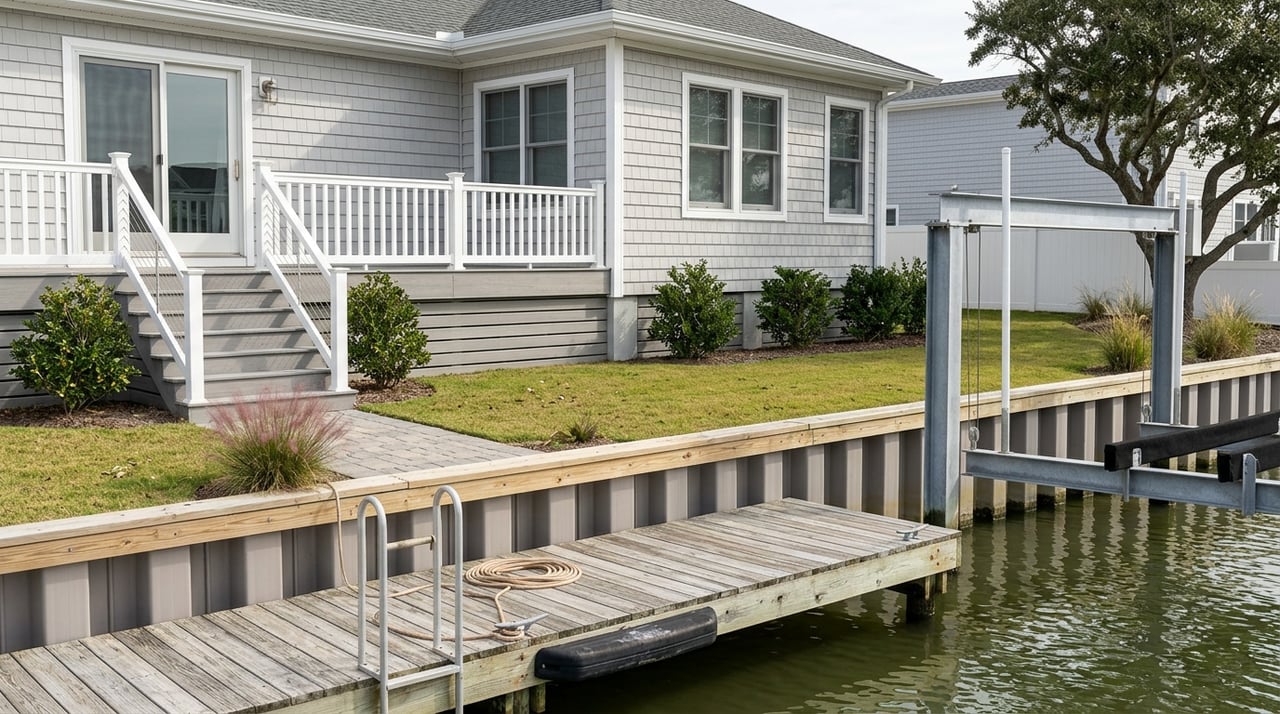
Dreaming about keeping your boat behind your house in the Outer Banks? A canal home in Colington Harbour can make that lifestyle feel very real, but it also comes with questions that are easy to miss if you are shopping from a listing alert alone. If you are weighing the appeal of private dock access, soundside amenities, and a more residential setting in Kill Devil Hills, this guide will help you understand what to look for before you write an offer. Let’s dive in.
Why Colington Harbour Stands Out
Colington Harbour is the community most buyers mean when they search for canal homes in Colington. Dare County describes Colington as an unincorporated soundside community made up of Little and Big Colington Islands, connected by Colington Cut and an extensive canal system. It is also identified as one of the larger year-round communities in Dare County.
That matters because you are not just buying a house near the water. You are buying into a lived-in, water-focused neighborhood where boating, paddling, and sound access are part of daily life. For many buyers, that creates a different feel than a marina-centered community or a more commercial waterfront area.
What You Are Really Buying
A canal home here is about more than the structure itself. Dare County presents Colington Harbour as a gated HOA community with a soundfront park, pavilion, sandy beaches, playground, picnic shelters, dog park, basketball court, marina with a boat launch, rentable slips, and a kayak ramp. Optional membership in the yacht and racquet club adds pools, tennis courts, and a clubhouse.
That mix of amenities gives you several ways to enjoy the water, even if the house you buy does not check every boating box on day one. It also means your buying decision should include the property, the canal access, the HOA rules, and the optional club lifestyle as one package.
There is also public access nearby. Dare County says the Colington Sound Access sits just past the second bridge on Colington Road, has parking for about 14 vehicles, and includes a kayak launch with calm, shallow water access. If you enjoy paddlecraft or smaller boats, that is another practical part of the area’s appeal.
Dockage Should Be Verified Early
If you are buying a canal home, dockage should be part of your first round of questions, not something you save for later. HOA covenants regulate boat use, wake control, ramp use, and slip access, so it is important to confirm exactly what comes with the property.
Ask whether the dock or slip is deeded, rented, shared, transferable, or subject to a waitlist. Also ask whether trailer storage, ramp use, or dock use is allowed under current HOA rules. Small details can have a big effect on how well the property fits your boating plans.
The covenants also include a no-wake, 5 mph rule inside the outer marker. Trailer stickers are required for ramp use, and rental slips are provided when available. Those rules are not deal breakers, but they are part of the day-to-day reality of using a canal home in this community.
Bulkheads Matter More Than Many Buyers Expect
On a canal property, the bulkhead is a major part of your due diligence. In North Carolina coastal waters, NC DEQ lists general permits for bulkheads, docks, boat ramps, and canal-related work. The bulkhead rule requires state approval, alignment review, notice to adjacent property owners, and compliance with local and federal requirements.
For you as a buyer, that means the bulkhead’s age, repair history, permit history, and visible condition all matter. Signs like slumping, shifting, or patchwork repairs deserve a closer look. A waterfront home can look great in photos while still carrying expensive shoreline maintenance risks.
If the property has riprap, dock improvements, or prior shoreline work, that history is worth reviewing before you commit. This is one area where local guidance and careful document review can save you from surprises later.
Bridge Clearance Is a Real Boating Question
One of the most common mistakes buyers make is assuming a canal home automatically works for their boat. It may, but you should verify that based on your boat’s actual air draft and route, not on a listing description.
The research makes this point clearly by comparing nearby boating routes. In Pirate’s Cove, the marina states that the route to Oregon Inlet uses a deep-water, well-marked channel and that the fixed bridge clearance at the Manteo/Nags Head causeway is 65 feet at mean high tide. The larger lesson is simple: bridge clearance and route conditions should always be checked against your vessel.
If you have a taller boat, make route verification part of your offer-stage homework. A home can be ideal on paper and still not work well for your boating needs.
Flood Risk Is Parcel Specific
Flood risk in Colington Harbour should be checked house by house. Dare County participates in the National Flood Insurance Program and the Community Rating System, and the county directs buyers to current flood maps, a map comparison tool, and local before-you-buy guidance.
Dare County also notes that flood insurance is separate from a homeowners policy. The county warns that coastal erosion and Coastal Barrier Resources System designations can affect insurance availability. That is why flood questions should be answered early, especially if you are budgeting for a second home or investment purchase.
The county’s flood map viewer compares previous flood zones with current effective maps as of June 19, 2020. Some homes may appear similar on the surface while having different base flood elevations. In practical terms, you want the exact flood zone for the parcel, not a general assumption based on the neighborhood.
An elevation certificate can also be useful. Dare County notes that base flood elevation may change even when an area looks similar on the map, and FEMA notes that homes in Zone A or Zone V may need an elevation certificate to verify compliance. That document can help you better understand first-floor height and possible insurance costs.
Wind, Salt Air, and Wear Add Up
Coastal canal homes face more than flood exposure. FEMA’s coastal construction guidance notes that high winds can damage roof flashing and lead to water intrusion, mold, corrosion, and dry rot. FEMA also says coastal wind loads can affect roofs, windows, doors, soffits, and their connections.
Salt air adds another layer. FEMA warns that coastal salt air can shorten the service life of soffits, connectors, fasteners, and rooftop equipment because of corrosion. On a canal home, that makes regular maintenance especially important.
When you tour or inspect a property, pay close attention to roof condition, flashing, windows, doors, rust on metal hardware, lower-enclosure moisture, and any sign of prior water intrusion. In many cases, the biggest hidden cost is not the canal frontage itself. It is the combination of flood exposure, salt corrosion, and past repair history.
How Colington Harbour Compares
Colington Harbour is best viewed as a residential canal-and-sound community. Dare County’s description points to canals, marinas, public sound access, and a large year-round population, which gives it a more neighborhood-oriented feel.
That sets it apart from Pirate’s Cove in Manteo. There, the HOA describes a gated community with two pools, a clubhouse, a fitness center, a pavilion, and four miles of common docks, while the marina itself is presented as a protected, deep-water, full-service marina with 195 slips, fuel, in-slip fueling, and charter operations.
Wanchese offers a different experience again. Dare County describes Wanchese as a community rooted in fishing and boat building, with active marinas and the county-operated Wanchese Boat Ramp for trailered boats. That makes it feel more like a working waterfront and service hub than a private canal subdivision.
If your goal is a residential canal lifestyle with HOA-managed sound access, Colington Harbour may be the better fit. If you want a deep-water marina environment, Pirate’s Cove may align more closely. If you prefer public ramp access and a working-waterfront setting, Wanchese may be worth a look.
Smart Questions Before You Offer
Before you spend money on inspections and move further into the process, it helps to narrow in on the most important questions. For canal homes in Colington Harbour, those questions usually center on boat access, flood cost, and maintenance risk.
Use this checklist as a starting point:
- What is the exact flood zone for this parcel?
- Is there a current elevation certificate?
- Is the bulkhead permitted, and when was it installed or repaired?
- Who is responsible for future bulkhead maintenance?
- Is the dock or slip deeded, rented, shared, or waitlisted?
- Can your boat safely clear the route to open water at current tide conditions?
- Are there HOA, club, ramp, trailer, or storage restrictions that affect your use?
- Have there been prior flood claims, moisture issues, corrosion concerns, roof repairs, or insurance nonrenewals?
- Is the property in or near a CBRS area?
- Is the lower level compliant with local flood and coastal construction rules?
- Are there known dredging, shoaling, or canal access issues?
Why Local Guidance Helps
Buying a canal home in Colington Harbour is part lifestyle decision and part property-risk analysis. You are balancing the appeal of water access and neighborhood amenities with practical issues like dock rights, bulkhead condition, flood insurance, and long-term coastal maintenance.
That is where local, hands-on guidance can make the process smoother. With decades of Outer Banks experience, concierge-style support, and deep familiarity with coastal properties, Lynn Bulman helps buyers look beyond the photos and focus on the details that shape day-to-day ownership. If you are thinking about buying a canal home in Colington Harbour, connect with Lynn Bulman for trusted local insight and personalized guidance.
FAQs
What is Colington Harbour in Kill Devil Hills?
- Colington Harbour is a gated HOA community in the Colington area of Kill Devil Hills, with canals, marina access, a soundfront park, beaches, picnic areas, a kayak ramp, and other neighborhood amenities described by Dare County.
What should you verify about a Colington Harbour dock or slip?
- You should confirm whether a dock or slip is deeded, rented, shared, transferable, or waitlisted, and whether current HOA rules affect ramp use, trailer storage, or boat access.
Why is bulkhead condition important for a canal home in Colington Harbour?
- Bulkheads are regulated in North Carolina coastal waters, and their age, permit history, repair history, and visible condition can affect future maintenance costs and shoreline stability.
How do flood zones affect buying a canal home in Colington Harbour?
- Flood zones can affect insurance costs, elevation requirements, and risk exposure, so buyers should check the exact parcel flood zone, review current county mapping tools, and ask whether an elevation certificate is available.
How is Colington Harbour different from Pirate’s Cove or Wanchese?
- Colington Harbour is generally a more residential canal-and-sound community, while Pirate’s Cove is more marina-focused and Wanchese is more of a working-waterfront area with public ramp access.
What are the best offer-stage questions for a Colington Harbour canal home?
- Focus on flood zone, elevation certificate, bulkhead permits and repairs, dock or slip rights, boat clearance, HOA restrictions, prior water or corrosion issues, possible CBRS concerns, and canal access conditions.
